


“As of Friday evening, there are no wrongfully detained Americans in Venezuela, and we want to keep it that way,” she said.
“We are committed to doing everything we can to prevent one American national from being wrongfully detained by the Venezuelan regime ever again. To this end, I want to reiterate our clear warning—no one should go to Venezuela.
“We have the risk certainly of wrongful detention, of Americans, of dual nationals, of lawful permanent residents. Whoever you are, don’t go there. The risk is extremely high.”
Americans traveling even to border regions near Venezuela face this risk, she added.
If detained by Venezuelan authorities, Americans could be held in the country for months or even years, Bruce said, adding that being released from the country is never guaranteed.
“You can stop that yourself by not going to Venezuela,” she said.
Venezuela released 10 detained Americans. In exchange, over 250 Venezuelans deported from the United States and imprisoned in El Salvador were released.
“Every wrongfully detained American in Venezuela is now free and back in our homeland,” Secretary of State Marco Rubio said in a July 18 statement. He condemned the regime for imprisoning Americans under “highly questionable circumstances and without proper due process.”
“We also welcome the release of Venezuelan political prisoners and detainees that were also released from Venezuelan prisons,” Rubio said. “The Trump Administration continues to support the restoration of democracy in Venezuela. The regime’s use of unjust detention as a tool of political repression must end.”
Since July 2024, Amnesty has documented 15 cases of individuals forcibly disappeared in Venezuela, with 11 of them still under “enforced disappearance.” These include citizens of the United States, Spain, Colombia, France, Ukraine, and Uruguay.
In some cases, detainees are specifically targeted due to their nationalities, which is used by the regime to justify “narratives of alleged foreign conspiracies and attacks, and primarily also as a bargaining chip in negotiations with third countries,” the report said.
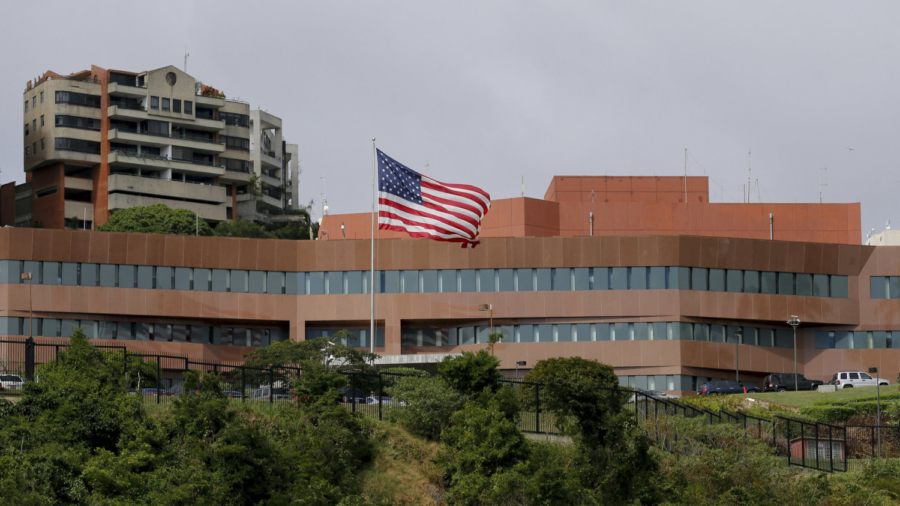
The department withdrew all diplomatic personnel from the country in March 2019 and suspended operations. As a result, the U.S. government cannot provide consular assistance or emergency services to U.S. citizens in Venezuela, it said.
If U.S. citizens are detained in Venezuela, the U.S. government has no way to contact them, with detainees prohibited from getting in touch with their family members, the department warned.
“Security forces have detained U.S. citizens for up to five years without respect for due process. The U.S. government is not generally informed of the detention of U.S. citizens in Venezuela nor is it permitted to visit U.S. national detainees in Venezuela,” the travel advisory said.
“According to former detainees, as well as independent human rights organizations, detainees have been subjected to torture and cruel, inhumane, or degrading treatment or punishment, including severe beatings, prolonged restraint in stress positions, and waterboarding.”
These include visa restrictions on individuals, export controls, terror-related sanctions, and drug trafficking-related sanctions.