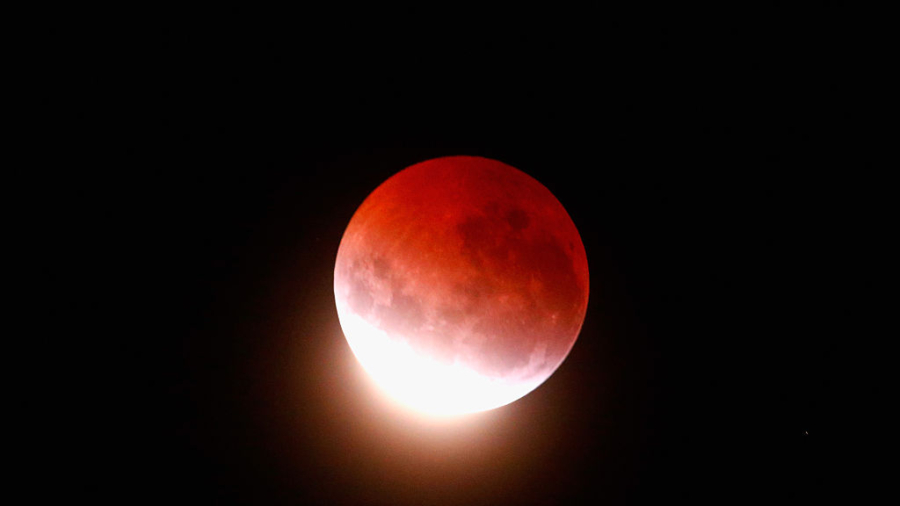
A rare celestial event is set to unfold on Sunday, Sept. 7, when the Full Corn Moon will plunge into Earth’s shadow, transforming into a vivid Blood Moon for a global audience.
This marks only the second total lunar eclipse of 2025. The Corn Moon will illuminate skies across Asia, Africa, Europe, Australia, New Zealand, and much of Antarctica—while observers in North and South America will still witness the full moon at the close of the astronomical summer, but without the eclipse.
What Skywatchers Can Expect Sept. 7
Visibility: The eclipse will grace the skies of Asia, Africa, Europe, Australia, New Zealand, and Antarctica. North and South American viewers will see the Corn Moon but will miss the eclipse.
Timing & Duration: Totality will last about 82 minutes, making it the most enduring total lunar eclipse since November 2022, which also lasted about 84 minutes.
Viewing Tips: This cosmic show can be enjoyed without equipment, but binoculars or a small telescope will reveal finer surface details.
According to NASA, the term “Blood Moon” often refers to the Moon’s striking red glow during a total lunar eclipse, when Earth moves directly between the Sun and the Moon and blocks direct sunlight.
"When this happens, the only light that reaches the Moon's surface is from the edges of the Earth's atmosphere. The air molecules from Earth's atmosphere scatter out most of the blue light," states NASA. "The remaining light reflects onto the Moon's surface with a red glow, making the Moon appear red in the night sky." The name “Blood Moon” can also describe a full moon that looks red due to dust, smoke, or haze in the atmosphere, or one of autumn’s full moons that takes on a crimson tint as the season’s leaves turn.
Time and Date explains that the September full moon is often called the Corn Moon because it comes at the time of year when corn and other crops are harvested. Some years,
the September full moon is also the Harvest Moon, which is the moon closest to the fall equinox. But in 2025, the equinox lines up with October’s full moon instead, so September’s moon keeps the Corn Moon name and October will have the Harvest Moon this year. The Corn Moon goes by many names in different cultures.
According to the Farmers’ Almanac, it’s also been called other names that reflect harvest time and seasonal changes, such as the Autumn Moon, Child Moon, Corn Harvest Moon, Falling Leaves Moon, Leaves Turning Moon, and Rutting Moon.
Here are a few more celestial events to look forward to this month:
Sept. 21: Watch for Saturn at opposition, when the ringed planet shines brightest for the year. Look for the ringed planet Saturn in the eastern sky after sunset, glowing steadily with a golden hue. To see its iconic rings, even a small telescope or a pair of binoculars can bring out their color and detail.
Sept. 22: The autumnal equinox arrives at 2:19 p.m. EDT, officially ushering in the fall season. The days will start getting shorter, with the sun rising later and setting earlier, and the nights will start to get longer.